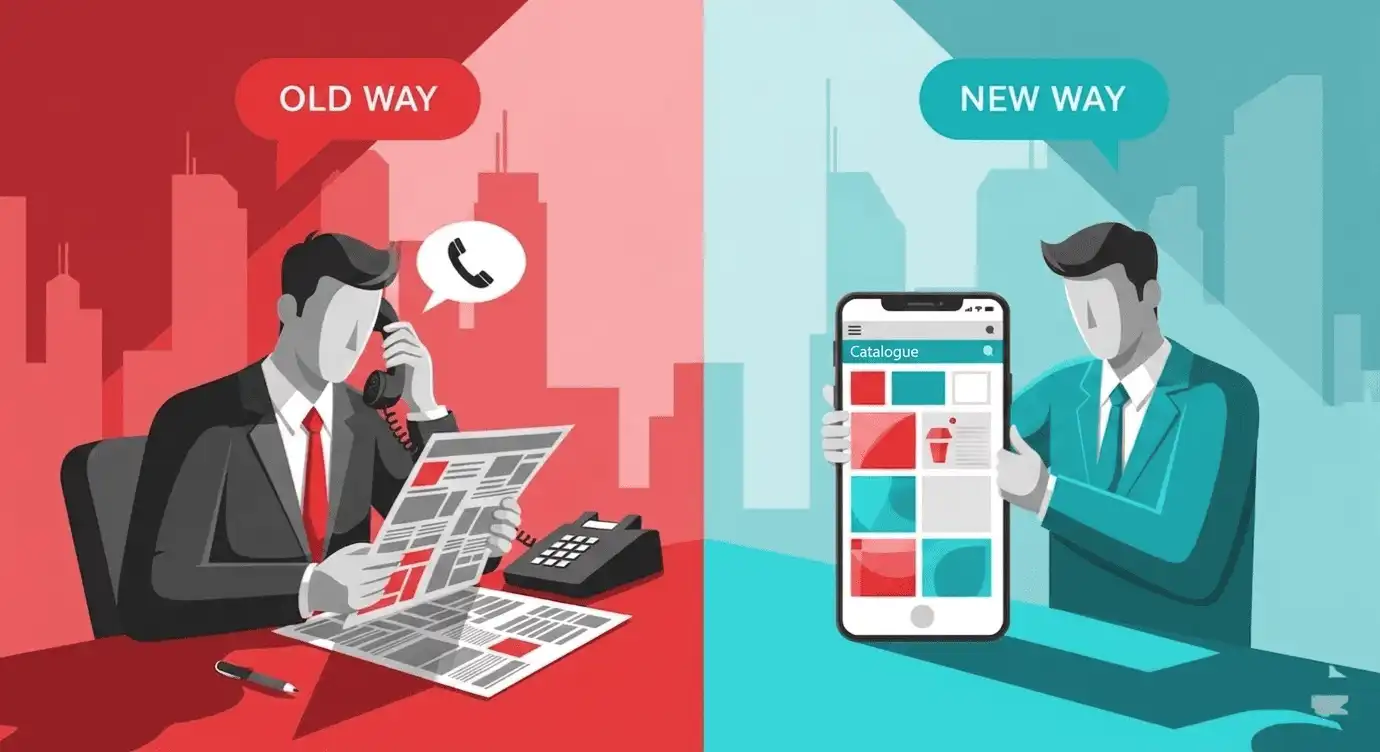
1. The State of B2B Supply in India Today
Walk into any wholesale market in India — Chandni Chowk in Delhi, Fancy Bazar in Guwahati, Chickpet in Bangalore — and you will find a similar scene. Suppliers with great products, deep expertise, and years of trade relationships, all relying on the same methods they used 15 years ago: phone calls, WhatsApp forwards, printed price lists, and word-of-mouth.
This system works — until it doesn't. It works for existing relationships. It completely fails for new customer acquisition at scale.
2. What Has Changed: The Buyer Behaviour Shift
Five years ago, a retailer in Hyderabad looking for a new fabric supplier would call their contacts and ask for referrals. Today, that same retailer opens Google first.
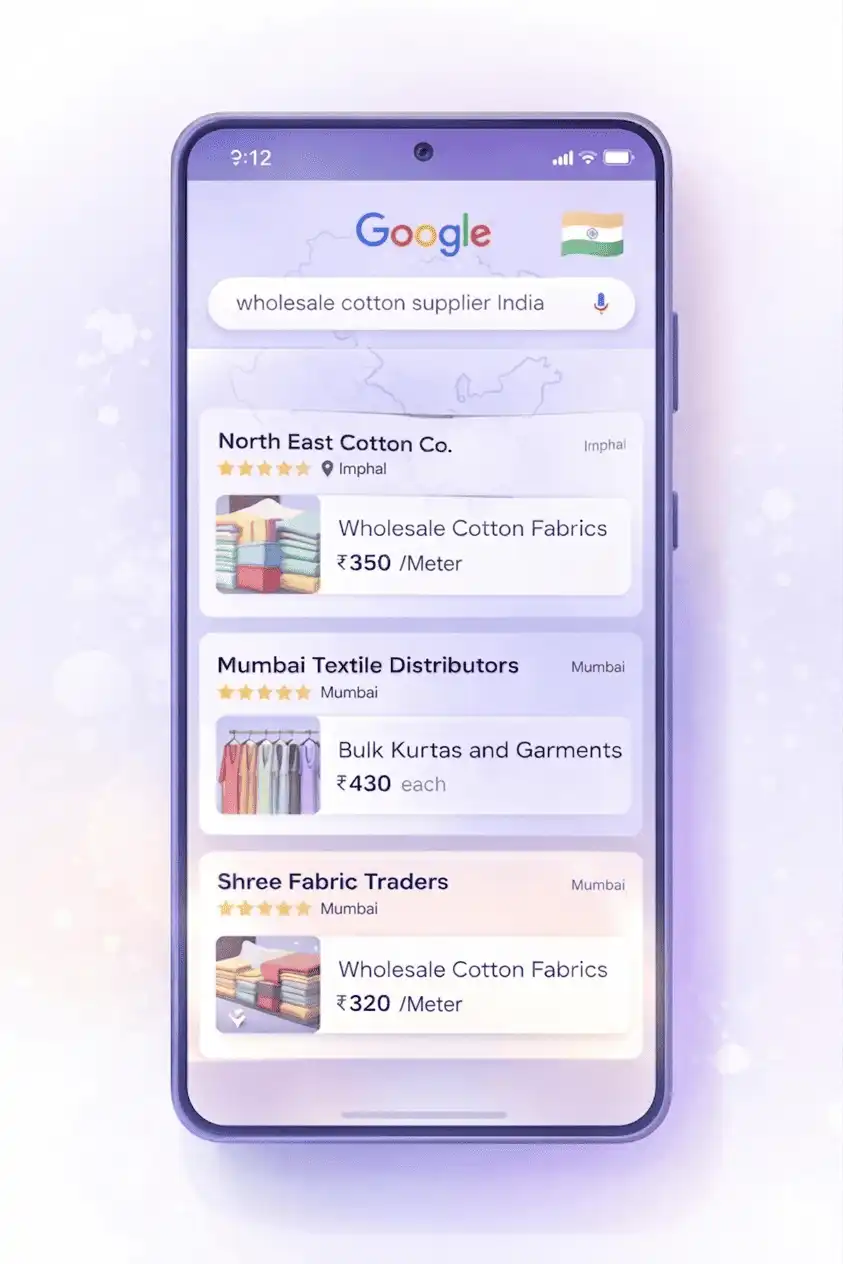
They type something like "wholesale cotton fabric supplier Assam" or "ready-made garment supplier north-east India". If you are not on Google with a product catalogue, you simply do not exist for that buyer — regardless of how good your products are.
🛒 The New B2B Buyer Journey
- Buyer identifies a product need (e.g. needs 500 cotton kurtas for their retail shop).
- Buyer searches Google: "cotton kurta wholesale supplier India".
- Buyer browses 3–5 supplier catalogue pages and compares prices and product range.
- Buyer contacts 1–2 suppliers via WhatsApp directly from their catalogue page.
- Order placed — the supplier who had the best digital presence wins.
3. Physical Catalogue vs Digital Catalogue: The Real Comparison
4. How Google Changed B2B Discovery Forever
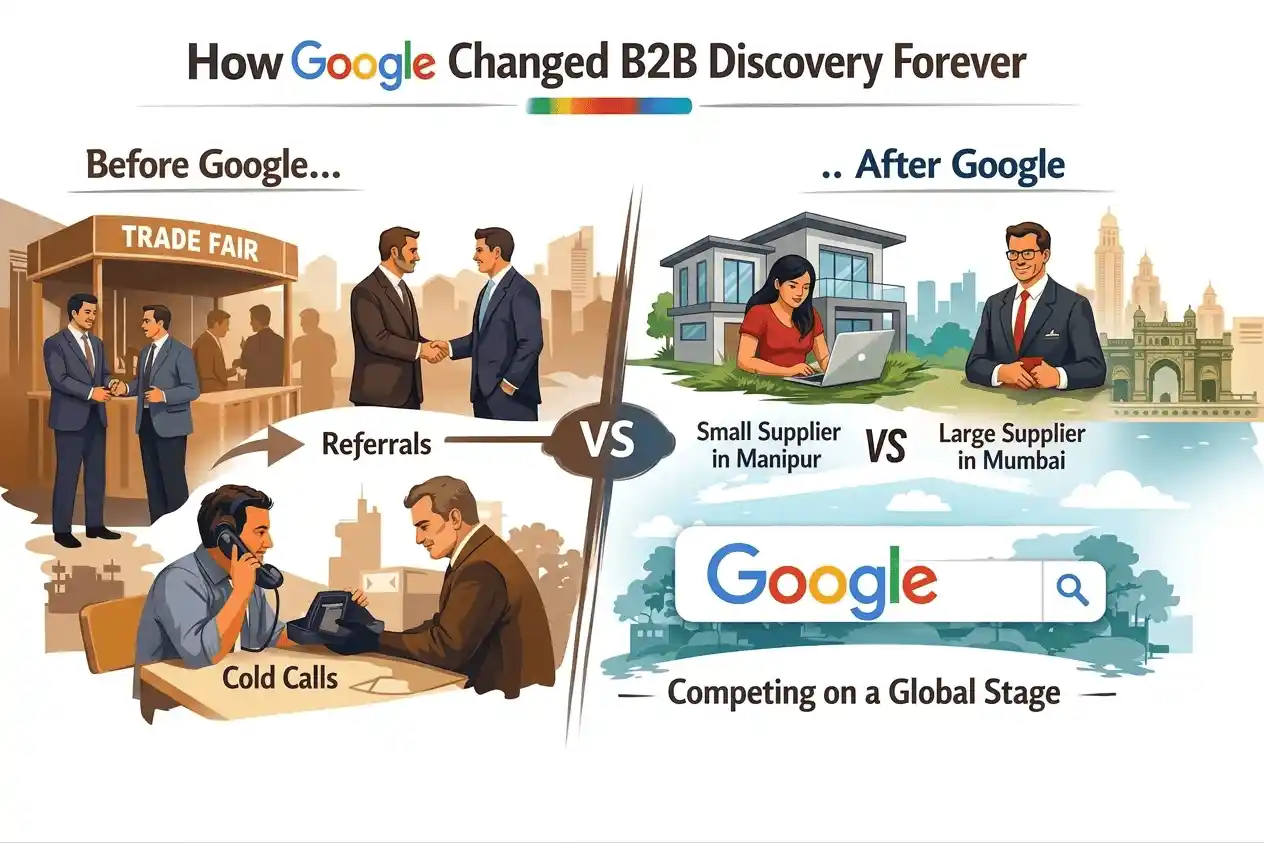
Before Google, B2B discovery was entirely relationship-driven. You needed to know someone who knew someone. Trade fairs, personal referrals, and cold calls were the only ways to find new suppliers or buyers.
Google democratised this. Now a small supplier in Manipur can compete for the same buyer's attention as a large supplier in Mumbai — if they have the right digital presence.
📐 Product Schema — The Technology Behind Google Rankings
When ShopSupplier publishes your catalogue, it automatically adds Product Schema markup to every product. This is structured data code that tells Google exactly what each item is — its name, category, price, availability, and seller.
- Google can display your product image and price directly in search results.
- Your products appear in Google Shopping-style results — no paid ads needed.
- Schema markup is a confirmed Google ranking factor for product pages.
- Correct markup can result in "Rich Results" — visually enhanced search listings that get significantly more clicks.
5. What a Good Digital Catalogue Must Do
Not all digital catalogues are equal. A PDF shared on WhatsApp is technically "digital" but provides none of the benefits of a true web-based catalogue. Here is what a proper digital catalogue must deliver for a B2B supplier in India.
6. The B2B Supplier Who Waits Will Lose
Google search rankings are not instant — they build over time. A supplier who creates their digital catalogue today will have 6 months of indexed content by the time their competitor finally decides to start.
In SEO, this is called domain authority — the longer your catalogue has been indexed, the more Google trusts it, and the higher it ranks. Every month you wait is a month of authority you are gifting to someone else in your category.

7. How ShopSupplier Solves This for Indian Suppliers
ShopSupplier was built specifically for the reality of Indian B2B supply — not for Silicon Valley startups or enterprise software buyers.
- No technical knowledge needed — add products in 2 minutes, no coding, no website builders.
- No GST required to start — create your catalogue and get discovered before you are even formally registered.
- No app for buyers — your catalogue opens in any browser; customers order via WhatsApp they already use.
- Google Product Schema auto-applied — every product you add gets structured data automatically.
- One-time activation fee — no monthly subscription, no hidden charges.
- Works on 2G/3G — designed for India's real network conditions, not ideal broadband.
8. Frequently Asked Questions
❓ Do I need a website to use ShopSupplier?
No. ShopSupplier is your website. Your catalogue page is a public web page that Google can index — you do not need to build or manage any separate website.
❓ How long does it take for Google to index my products?
Typically 7–30 days for new domains. For established domains it can be faster. Once indexed, your products remain in Google's database as long as your catalogue is live.
❓ What if I don't have professional product photos?
Clear photos taken on a mobile phone work well. Good lighting and a plain background are enough. ShopSupplier auto-compresses images so even phone photos upload quickly.
❓ Can I have multiple product categories?
Yes. Add as many categories as you need — clothing, groceries, electronics, hardware — all in one catalogue with full search and filtering for your buyers.
❓ What happens to my orders when they come via WhatsApp?
Every order is simultaneously saved in your Admin Panel and sent to your WhatsApp as a formatted message. You see the customer name, address, items, and total. You can also mark orders as completed from your dashboard.
The Future is Already Here
Every day, Indian buyers search Google for suppliers like you. Activate your ShopSupplier catalogue and make sure they find you — not your competitor.
🚀 Create Your Digital Catalogue